Ancient Gortyn is located in southern Crete, in the fertile Messara Plain near the modern village of Agioi Deka, about 45 km south of Heraklion. It is one of the largest archaeological sites on the island and was continuously inhabited from the Neolithic and Minoan periods through Roman and Byzantine times.
Historically, Gortyn became especially important in the 1st millennium BC, when it rose as one of the dominant city-states of Crete, eventually surpassing Phaistos. In the Roman period, it became the capital of the province of Crete and Cyrenaica, serving as the administrative center of the island. The city was large, wealthy, and well organized, with public buildings, temples, and infrastructure.
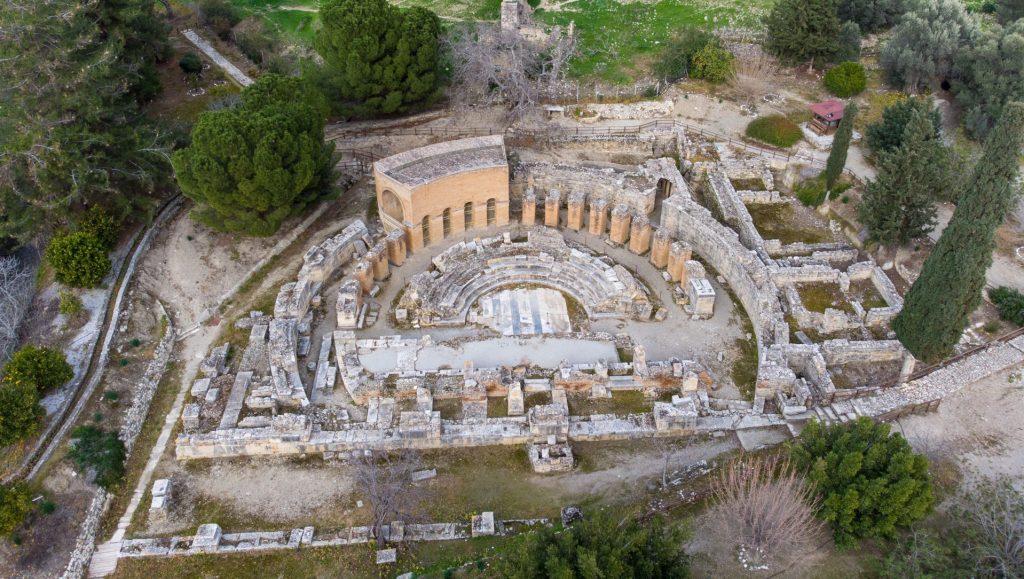
Gortyn is most famous for the Gortyn Law Code, carved on stone in the 5th century BC. It is the oldest and most complete surviving code of ancient Greek law, covering topics such as family law, inheritance, property rights, and social status. Another key monument is the Roman Odeon, where parts of the inscription are preserved.
Today, Ancient Gortyn is an open-air archaeological site. Visitors can walk among extensive ruins, see remains of Roman and Greek structures, and view the famous law inscription, making it one of the most important historical sites in Crete.


